

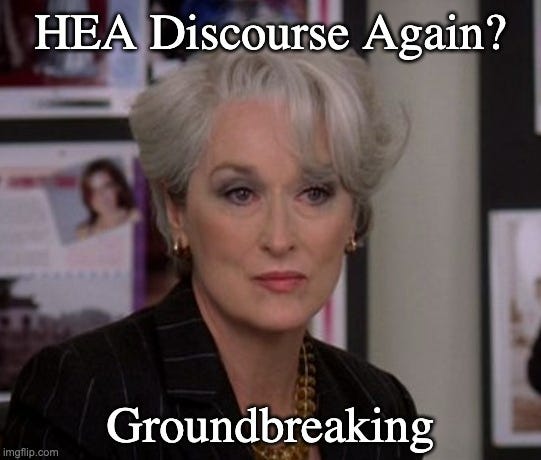
HEA Discourse Again? Groundbreaking.
This… “HEA”? Oh, okay. I see. You think this has nothing to do with you.

Sharing a hit Thread I posted during the latest kerfluffle about why romance novels, as a genre, require an HEA.
—
This… “HEA”? Oh, okay. I see. You think this has nothing to do with you.
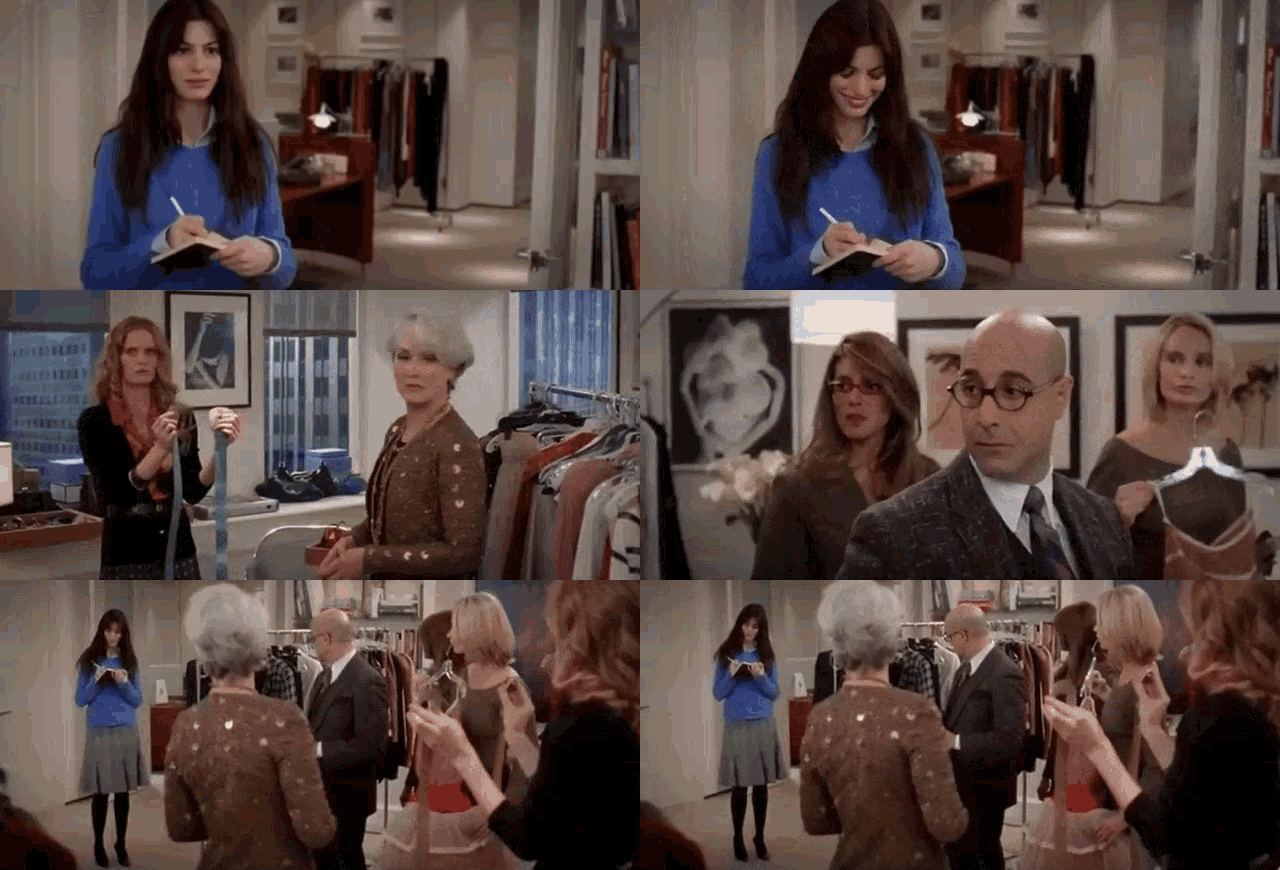
You go to your bookstore and you select that book they made into a movie, for instance, and then you come on social media and call it predictable because it ended happily and you’re trying to tell the world that you’re above genre conventions.
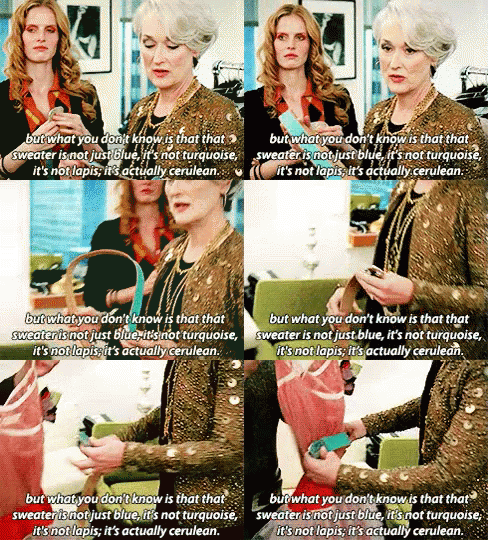
But what you don’t know is that that book isn’t just a book. It’s not literary fiction. It’s not a love story.
It’s actually a romance novel.
And you’re also blithely unaware of the fact that in the 1930s, British publisher Mills & Boon began to concentrate exclusively on romances of the sweet variety, known for their serialized happy endings. And then I think it was 1958 that Harlequin began reprinting those romances for the North American market?
Then, in the 1970s, more explicit sexuality entered single-title paperback originals, and the market responded to readers who wanted passion, conflict, fantasy, and still—the happy ending.
And then those expectations coalesced across contemporary category romance, historical romance, paranormal romance, erotic romance, romantasy, dark romance, and every other subgenre, merging them into a distinct genre with clear conventions, until you, no doubt, found one on a featured book table and decided the ending was beside the point.
However, that HEA represents the work of a whole genre over generations: writers, editors, publishers, booksellers, critics, scholars, and readers insisting that love is not merely present in the story…
The HEA is the promise the story is organized to fulfill.
And it’s sort of comical how you think your opinion exempts you from genre conventions when, in fact, the book you’re calling predictable was handed to you by a genre that spent decades honing preferences and teaching readers and writers exactly what a love story has to do before it gets to call itself a romance novel.
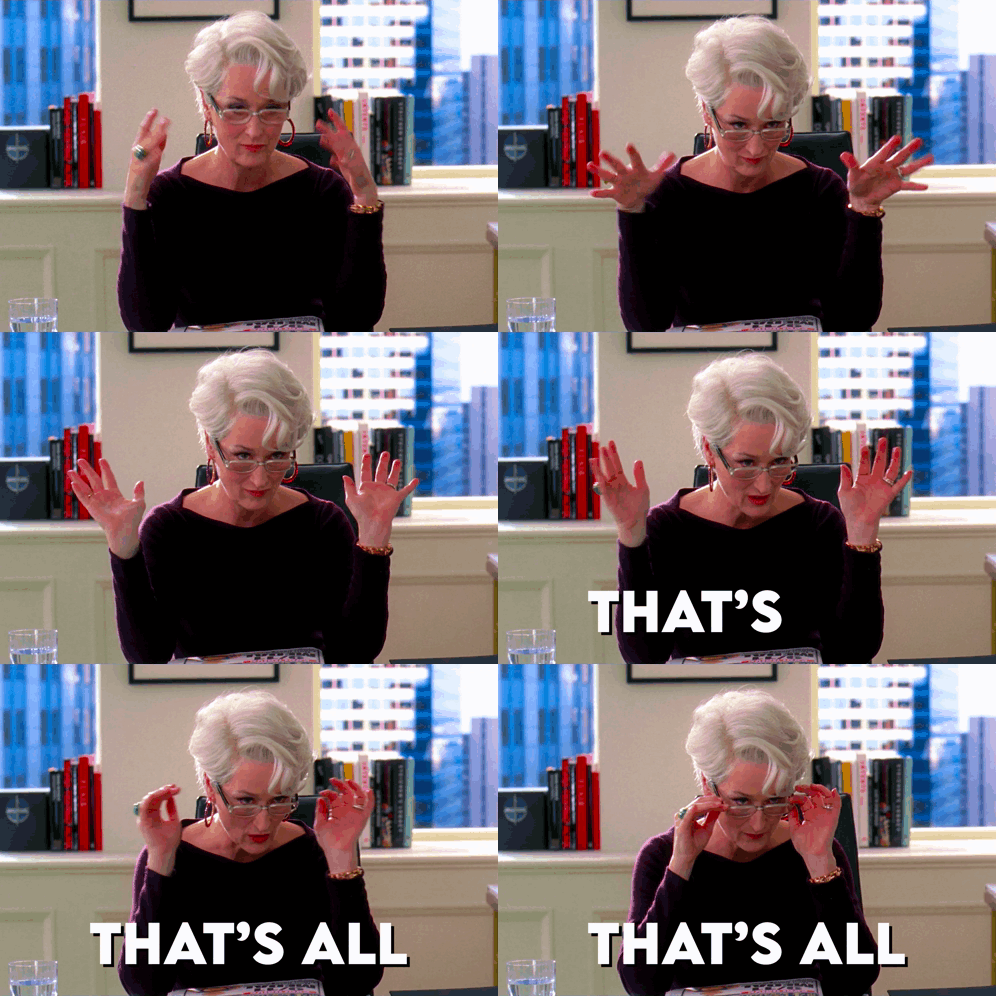
When the latest HEA discourse popped up, I couldn’t help but think of the iconic scene from Devil Wears Prada where Andy gets a wake-up call that just because she’s ignorant of the conventions of the fashion industry doesn’t mean it’s meaningless or illogical.
Andy can’t see the difference between two different belts because her eye is untrained — she simply doesn’t know what she’s looking at. Miranda’s monologue reveals the nuance, history, and impact of fashion, and how Andy isn’t exempt from its influence.
One of my first Substack posts was actually engaging with the question of “what is a romance novel?.” It sounds didactic and simplistic, particularly to outsiders, but that’s because it’s just shorthand — the real meaning is extremely difficult to articulate because it it constructed affectively inside the reader.
In 2026, the genre rules for “popular romance fiction marketed as a romance novel1” are clearer than they’ve ever been, but still we could have robust in-community conversations with each other about how successful a particular book was in delivering on the expectations.
In studying early scholarly work on romance readers in the 1980s, one can see that the rules were still getting solidified through trial and error and calibrated by reader response. It’s important for romance readers to understand that two things can be true: the conventions of romance can be material and “real” while also being held together by an elaborate ecosystem of readers, writers, publishers, and platforms that are constantly evolving.
We can retroactively see how older works could satisfy modern definitions (see: Pride and Prejudice) while also understanding they were produced in a context where those rules didn’t exist and they were in conversation with other genre conventions of that time, and that those works are part of the lineage of the modern genre without being members of the same species.
I understand why this discourse continues to emerge — even leaving aside bad-faith engagement-bait takes, it’s grating when some outsider (of any gender) shows up and wants to “mansplain” something they know nothing about. It sounds just like Andy’s snort in response to the intricacies of fashion.
It’s no surprise that this scene from Devil Wears Prada keeps popping up for me — the scene is about stereotypes, specifically paternalistic ones. The entire plot of DWP is based around Andy reexamining her self-concept as a competent, intellectual woman in a feminine-coded industry that seems to be shallow and aesthetic-based.
My research on stereotypes about romance readers validates that the stereotype is inextricably linked with romance novels’ association with women, but specifically those coded as “warm but not competent.” This is aligned to the “paternalistic stereotype” and people in this group are pitied.
So, when I see the HEA discourse come around, it’s actually just very predictable — not just why “outsiders” question the genre conventions, but also why it provokes such a strong response from romance readers who feel their competency is being questioned.
Florals for spring? Yes, of course we all tend to associate florals with spring because we’ve been raised in an environment where flowers grow in spring in a lot of places and our culture uses that imagery to symbolize renewal, rebirth, and awakening. The associations will persist as long as we live in that world.
So is it groundbreaking? No. But I can understand why it happens.
Not a coincidence that I used the Devil Wears Prada gifs in my first-ever Substack post. It’s a good companion to the post you just read, in case you haven’t seen it yet:

…yes, these are North American publishing definitions. Yes, you’ll find variation in how hard-and-fast these expectations are understood in other countries, but also the majority of publishing is driven by global corporations that are disproportionately based in North America and that means that the influence of North American publishing conventions cross physical borders. There are so many fascinating avenues to explore about regional variations of romantic stories and how they’re similar but different, but here I’m talking about romance NOVELS (not movies, graphic novels, comics, TV shows, fanfiction, etc. etc. etc.) as a genre of published books.
I always want to (pointlessly) scream, “it’s a ROMANCE, NOT a love story!” at articles/interviews about romance books, when the author/interviewer inevitably refers to it as a love story. I know they are most likely trying not to use repetitive language but it also demonstrates their unfamiliarity genre conventions. One of my pet peeves and it’s silly, but there is a meaningful difference if you are discussing a book. Almost like lumping all fantasy in with science fiction.
Lovely post!! There is actually one of my dislikes when it comes to the romance book community!!
A lot of readers leaving negative/ bad reviews for a specific setting (i.e. a certain trope, dynamic, content warnings) and ended up giving low ratings! It’s sometimes funny to see reviews like that when those are literally in the description/ blurb of the book.
When it comes to HEA, to me I feel like it gives me a sense that it will all end well at the end. It’s a bit heart-breaking to see people thinking having a HEA when this is actually the goal of a lot of people, not just readers in fiction and reality.